What we gained when our son Leon was diagnosed Deaf
When Aly sat in a soundproof audiology room for up to three hours with her newborn son, she wasn’t expecting the words that followed.
“Your child is Deaf.”
Leon was just five weeks old. There was no family history. No prior connection to the Deaf community. Aly and her husband Kyle had simply hoped for a healthy baby boy after two daughters. Instead, they found themselves stepping into an entirely new world — one filled with unknowns.
“What does this mean for his life?” Aly remembers thinking. “What support is there? How much will I need to advocate?”
She gave herself a day or two to process the shock. Then she made a decision: We’re doing this. Let’s go.
That mindset would shape everything that followed.
The early years: Frustration and fierce determination
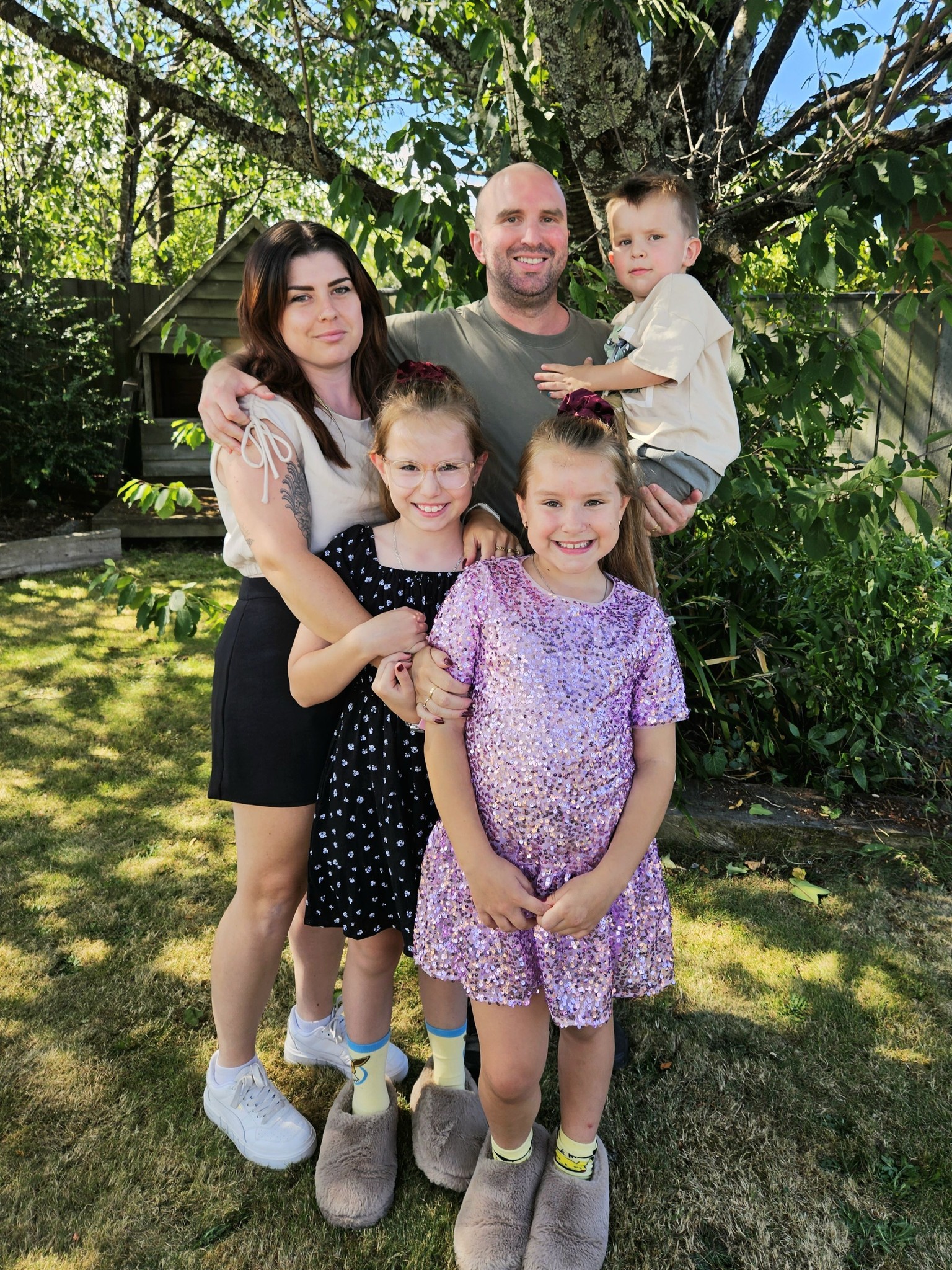 Leon’s early years were not easy. Communication was limited. By two, he still couldn’t speak. The frustration — for him and for his parents — was intense.
“It was heartbreaking,” Aly says. “He didn’t know how to tell us what he needed.”
Learning New Zealand Sign Language (NZSL) began early, but progress took time. Aly was juggling full-time work, two older daughters and constant medical appointments. Support existed — but much of it had to be found, requested and pushed for.
“I didn’t even know what I should be advocating for,” she says. “You have to put your big girl pants on and ask — who do I talk to? What should we be getting?”
When they finally secured a resource teacher after more than a year of waiting, they discovered she didn’t sign. It was a painful reminder that support systems, while present, still have gaps.
For Aly, the loneliness was one of the hardest parts. She actively sought out other parents in similar situations — because no one should navigate this alone.
The turning point: Access to sound
At age two, Leon lost all hearing in his left ear due to Enlarged Vestibular Aqueducts (EVA), with his right ear also at risk. Hearing aids were no longer enough.
In February 2025, Leon underwent bilateral cochlear implant surgery in Christchurch.
“It’s a world of difference,” Aly says.
Today, Leon speaks in sentences. He walks into rooms confidently and says hello. He plays more freely. He gets his point across. He’s cheeky, funny and fearless — jumping from heights, trees and objects his older sisters hesitates to climb.
Perhaps most powerful are the small moments.
“The first time he signed bird, pointed at it and said the word bird — that’s life-changing,” Aly shares.
After a process that took around two to three weeks, doctors told him he had fractured a small bone near his ear. It affected the hearing in his right ear — something he had already started to sense, but still found difficult to hear confirmed.
They offered a hearing aid, explaining that he could however manage without one if it wasn’t affecting him too much.
“At first, I was shocked. I worried about how hearing loss might affect my daily life, whether people would judge me, and whether my hearing might get worse over time.”
For her, cochlear implants aren’t about choosing one world over another. They’re about options.
“As he grows, if he loses them, or the batteries go flat, he’ll absolutely be okay — he has other ways to communicate. And if he ever decides they’re not for him, that’s his choice. We’ve given him access to all the options available, and we know he’ll thrive either way."
Discovering the beauty of NZSL
 Alongside technology came language — and culture.
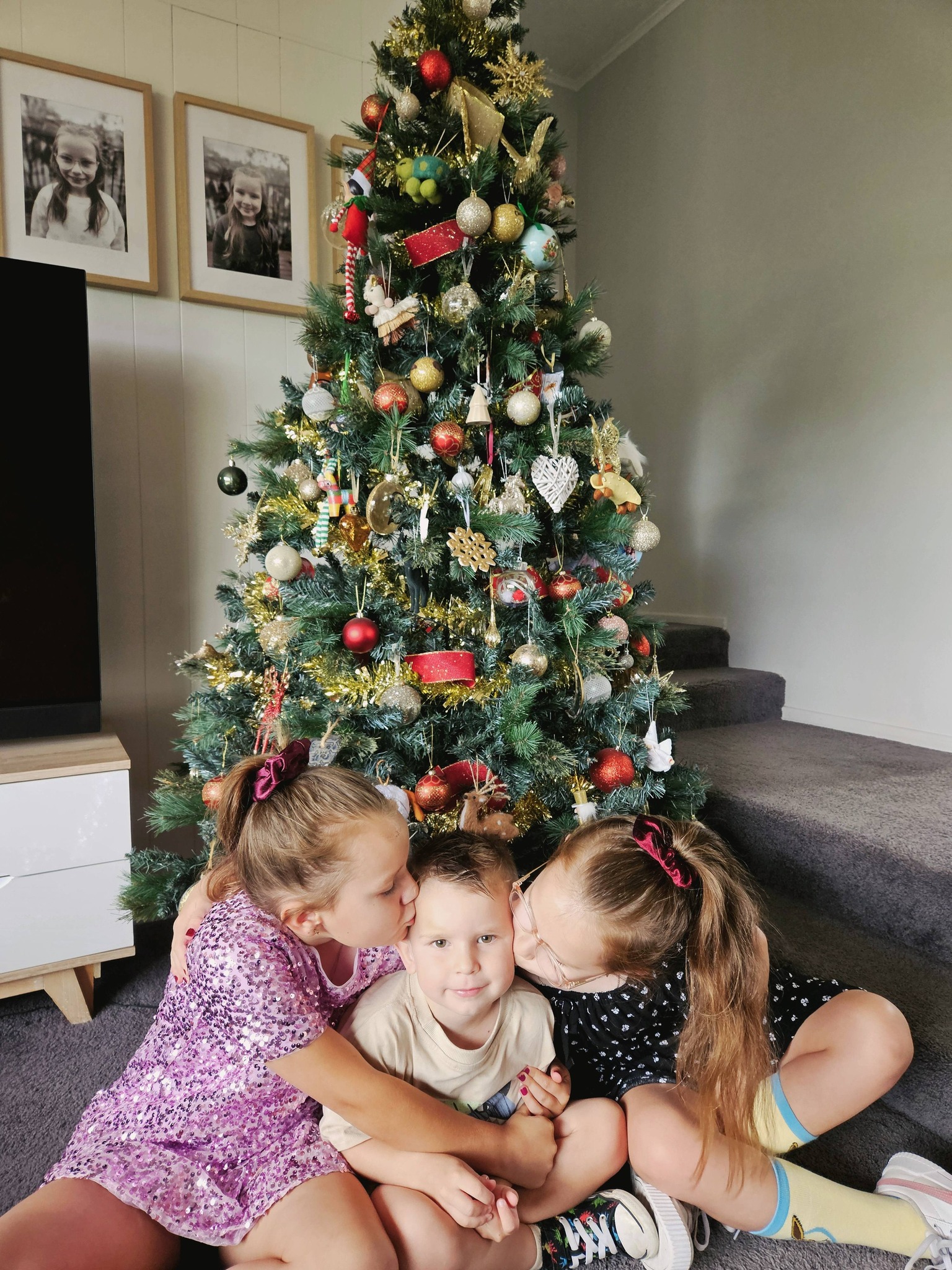
Through First Signs lessons every two weeks, Deaf playgroups, community events, coffee catch-ups and even Parliament for the launch of the NZSL Strategy, Leon and his family have embraced NZSL. Aly and Kyle want to acknowledge the support of Leon’s two older sisters. “They are communicating thoughtfully with Deaf friends and the community, and inspiring empathy in others who may have additional needs. They’ve even been bringing NZSL into their schools, especially during NZSL and Deaf Awareness Weeks, which has been wonderful to see.”
“It’s such a beautiful world,” Aly says. “There aren’t just ‘Deaf people.’ There are many different types of deafness and each person experiences being deaf in their unique way.”
What has struck her most is the expressiveness of NZSL — the eye contact, facial expression and body language. It’s connection in its purest form.
She wishes more New Zealanders understood that NZSL is one of our official languages.
“Even basic signs at a café — ‘milk?’ ‘sugar?’ — could change someone’s day.”
For Aly, accessibility isn’t abstract. It’s daily life.
Confidence changes everything
Leon was always a cool kid, Aly says. But access to sound and language has transformed his confidence.
“He’s strong. He just takes everything in his stride.”
Yet she knows the next chapter — school — may bring new challenges. Funding criteria don’t always reflect real-world needs. Mainstream classrooms move fast. Inclusion requires more than goodwill.
“There’s no Deaf school in Wellington,” she says. “We’ve even asked ourselves — would we move cities for the right support, and would he receive the funding needed to support his learning?”
It’s a question no family should have to face.
A message to other parents
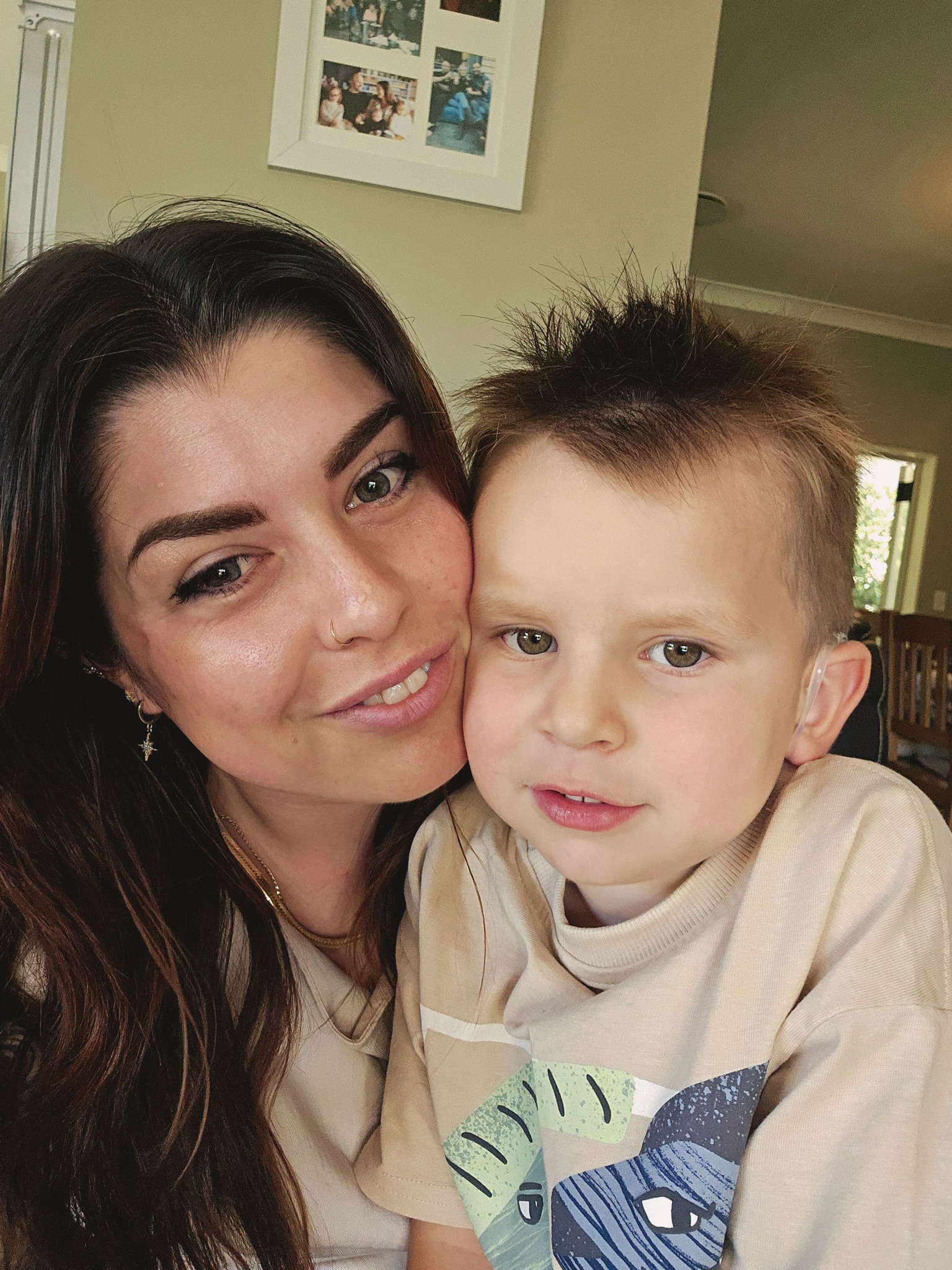 If another parent received the same diagnosis tomorrow, Aly’s message is simple:
“Don’t see it as a loss. See it as something you gain.”
Find your people. Ask the hard questions. Advocate boldly. Take your path — not someone else’s.
“You shouldn’t do this alone.”
Looking ahead
When Aly imagines Leon’s future, she hopes he has a foot in both worlds — Deaf and hearing — and the freedom to choose how he navigates them.
More than anything, she wants him to feel confident.
And watching him now — dinosaur-obsessed, outdoors-loving, greeting strangers with a fearless “hello” — she sees exactly that.
Leon’s story isn’t just about hearing. It’s about access. Belonging. Language. Choice.
And a family determined to make sure he has every option in the world.
This year, Aly and her family also laced up for Round the Bays Wellington, fundraising to give back to the community that has supported Leon. Because inclusion doesn’t just happen — it’s built by people who choose to stand up for it.
No Comments
Comment below
Related Posts
When playing sports helps build confidence: Riley's story
Teoy's story: How a sporting accident changed his perspective